بسم الله. ربي زدني علما. امين

بسم الله. ربي زدني علما. امين
May Allah the Almighty grant us more beneficial knowledge, accept our good deeds, forgive our mistakes, protect us from fitna, and join us with the righteous believers in Jannatul Ferdaus. Ameen.

Sunday, December 15, 2024

Note: Warning Against Accusing Other Muslims Of Showing Off

بسم الله الرحمن الرحيم 


The remarks "she's probably doing that just to show off" and "she is only showing off" are likely to come from individuals who are either envious, skeptical, or possess a more cynical worldview. They may be quick to judge others' motives, particularly if they feel threatened or inadequate in comparison. These individuals may also have a tendency to assume others' actions are driven by self-interest or ego rather than genuine goodwill.

As for distinguishing between someone doing something out of genuine enjoyment versus someone trying to impress or display superiority, there are a few key signs to look for:

### 1. **Consistency vs. Self-Promotion**:
   - **Genuine helpfulness**: A person who genuinely enjoys helping others typically does so consistently, without the need for external validation or recognition. They may help quietly or without fanfare.
   - **Impressing others**: Someone trying to show off may frequently emphasize their own contributions, seek praise, or make sure others notice their efforts. They may only help in situations where there is a clear audience to witness their actions.

### 2. **Intent vs. Outcome**:
   - **Genuine enjoyment**: When someone enjoys helping, their focus tends to be on the act of helping itself — the outcome and the process matter more than how others perceive them.
   - **Desire for recognition**: A person who is primarily motivated by showing off often places more importance on the outcome being noticed. They might highlight their achievements or talk about how much they've sacrificed or contributed, often to create an image of superiority.

### 3. **Humility vs. Hubris**:
   - **Genuine enjoyment**: A person who sincerely enjoys helping others often remains humble about their actions, sometimes downplaying their contributions or not drawing attention to themselves.
   - **Superior display**: A person who seeks to impress might consistently position themselves as superior — either intellectually, socially, or morally. They might subtly or overtly frame their actions as "better" than others' or imply that they have more knowledge, resources, or insight.

### 4. **Body Language and Communication Style**:
   - **Genuine helpers**: Their body language is relaxed and open. They don’t seem to be seeking applause; instead, they focus on the task at hand or the person they are helping.
   - **Show-offs**: They might use more dramatic or self-congratulatory body language, including eye contact aimed at gauging the reaction of others or posturing in a way that suggests they expect acknowledgment or admiration.

### 5. **Motivations Behind Religious or Intellectual Displays**:
   - **Genuine enthusiasm**: Someone with a sincere interest in religion or intellectual pursuits may share their knowledge out of a desire to connect, educate, or help others grow. They often listen more than they speak, showing interest in others' perspectives.
   - **Superiority**: Those trying to display their intellectual or religious superiority may dominate conversations, dismiss others' ideas, or use their knowledge as a way to put others down or assert their dominance.

### 6. **Feedback and Response**:
   - **Genuine helpers**: They are generally responsive to feedback, even critical feedback, and are open to learning or improving based on others' input.
   - **Show-offs**: They might dismiss or become defensive in the face of criticism, focusing more on defending their superiority than on self-improvement.

### In Summary:
The key difference often lies in the underlying **motivation**. A person who is genuinely helping or engaging in an activity out of enjoyment usually has a more **selfless** and consistent approach, while someone who is showing off is driven by a need for **recognition**, **validation**, or **superiority**. People who frequently judge others with remarks like "she's only showing off" may themselves be projecting their own insecurities or a lack of understanding of the person's true motivations.
⤴️ ChatGPT

❓ Question: What are 7 signs of someone doing the following actions if they are doing it to deliberately to show off versus if they are simply trying to be helpful or they want to inspire others to do the same good deed:
1] Posting motivational status updates on Facebook regularly 
2] Answering questions as a student 
3] Asking questions as a colleague attending an important meeting 
4] Offering to give some people a free ride 
5] Giving some amount of money as sadaqa/charity whether from themselves or on behalf of a deceased loved one 
6] Offering to mentor and give advice 
7] Asking others how they're doing whether online or face to face

💻 ChatGPT: To differentiate between actions done to show off versus those done with genuine intent to help or inspire others, we can look at specific behavioral and contextual clues for each of these actions. Here are seven signs for each scenario:

1) Posting Motivational Status Updates on Facebook Regularly

To Show Off: 

The posts are overly self-congratulatory or focus mostly on the poster’s achievements.

The posts frequently include "humblebrags" or indirectly boast about their lifestyle or success.

They are highly curated, showing a very polished or idealized image with little vulnerability or real challenges shared.

The posts are often accompanied by hashtags, emojis, or statements that are designed to garner attention or admiration.

They post excessively, seeking validation through likes or comments.

They rarely engage meaningfully with other people’s posts, focusing solely on their own.

The tone is self-centered, with a tendency to draw comparisons to others or suggest that others should follow their example.

To Inspire or Help: 

The posts share genuine experiences of struggle and growth, often with the intention of encouraging others who might be facing similar challenges.

They share insightful or thought-provoking content, often asking questions or encouraging discussions rather than just presenting their own opinions.

Posts are humble, showing both strengths and weaknesses, and often acknowledge others’ contributions.

There’s an emphasis on community and collective progress, not just personal success.

They engage with others’ posts, respond to comments, and encourage others to share their experiences.

The content focuses on self-improvement or mindfulness rather than creating a sense of superiority.

There is consistency in promoting well-being, not just occasional bursts for attention.

2) Answering Questions as a Student

To Show Off:

Their answers are overly detailed or long-winded, aiming to demonstrate how much they know, often at the expense of the question's clarity.

They frequently interrupt others to assert their knowledge or correct others, even when not necessary.

They seem eager to prove that they understand more than the person asking.

They often use complex language or jargon to make their answers seem more sophisticated or impressive.

They make sure to draw attention to their academic achievements, references, or personal accomplishments.

They seek out opportunities to answer to show off their knowledge, even when someone else could contribute just as well.

They expect admiration or praise after answering.

To Help or Inspire:

Their answers are clear, concise, and focused on explaining the concept in a way that benefits everyone in the room.

They engage respectfully with others, allowing space for other students to share their answers.

They make an effort to explain things in simpler terms for those who might not understand.

They aim to encourage a collaborative atmosphere, inviting other viewpoints and asking follow-up questions to spark deeper understanding.

They show humility in recognizing they don’t know everything, and are open to learning from others as well.

Their focus is more on sharing useful information than on impressing others with their knowledge.

They generously offer help outside of class, providing resources or guidance without expecting anything in return.

3) Asking Questions as a Colleague in an Important Meeting

To Show Off:

They ask questions that are designed to highlight their own knowledge or insights, not to genuinely seek understanding.

The questions are often overly complex or theoretical, in a way that is more about demonstrating their intellectual capability than contributing to the discussion.

They interrupt or dominate the conversation, frequently steering it back to topics where they can showcase their expertise.

They ask leading questions that allow them to provide the answer themselves or impress others with their own conclusions.

The questions are often strategic, designed to put others on the spot or show that they know more.

Their tone is often assertive, to position themselves as a thought leader.

They often look to receive praise or validation after asking their questions.

To Help or Inspire:

They ask questions that are thoughtful and relevant to the discussion, aimed at gaining a deeper understanding.

Their questions invite collaboration, often seeking input from others and valuing diverse perspectives.

They listen attentively to responses, engaging in a way that enhances the conversation and benefits the team.

They ask questions that clarify or move the discussion forward rather than simply seeking to show off.

They are humble, acknowledging that others might know more or have better insights.

They make sure that their questions are respectful of everyone’s time and do not interrupt unnecessarily.

They show genuine curiosity, and their questions are concise and to the point, reflecting a desire to move the discussion ahead.

4) Offering to Give Some People a Free Ride

To Show Off:

They publicly announce their generosity, often posting on social media or telling others about the ride they’re giving, making it about their kindness.

They make sure that others know that they are doing it out of their way, emphasizing the effort or sacrifice involved.

The offer is presented in a way that makes the person receiving the ride feel indebted or obligated to express gratitude publicly.

They are selective about who they offer rides to, often choosing people they think will appreciate it the most or can "repay" the favor in some way.

They may make a big deal out of how important or selfless their act is.

They expect to be thanked profusely or recognized for the good deed.

Their generosity often comes with conditions or an expectation of something in return.

To Help or Inspire:

They offer rides quietly, without seeking attention or praise.

They offer rides to anyone who needs them, regardless of who the person is, without a sense of selectivity or hierarchy.

The offer is made genuinely to make someone’s day easier, without making a big show of it.

They do not expect anything in return, focusing purely on the act of kindness itself.

They express a willingness to help because it’s simply the right thing to do, not because it makes them look good.

They offer rides without needing to constantly remind people about it later.

They don’t make others feel uncomfortable or indebted after receiving the help.

5) Giving Some Amount of Money as Sadaqa/Charity

To Show Off:

They announce their donation on social media, often including the amount or a picture of the donation.

They emphasize how much they’ve given or how generous they are, focusing on their act rather than the cause.

They make a point to remind others of their charity or compare it to others’ contributions.

The donation is made in a way that draws attention to their wealth or the prestige of the cause they are supporting.

They expect public praise or recognition for their donation, whether through thanks or acknowledgment in some form.

They selectively donate in ways that enhance their image or align with prestigious causes.

The donation is often given with an air of superiority, as though they are the "savior" of others.

To Help or Inspire:

They donate quietly, without seeking acknowledgment or fanfare.

The focus is on helping those in need and supporting the cause, rather than drawing attention to themselves.

They give because it aligns with their values, with no expectation of return or praise.

They donate regularly, even in small amounts, because it’s a part of their commitment to a cause, not for recognition.

They may also encourage others to give or get involved, without emphasizing their own donation.

They give generously, but without attaching conditions or expectations of gratitude.

They focus on how their donation can make a real impact for others.

6) Offering to Mentor and Give Advice

To Show Off:

They highlight their achievements or experiences when offering advice, making it about their credentials or success.

The mentorship is often about asserting authority or creating a power dynamic where they are positioned as "better" or "more knowledgeable."

They emphasize how much their advice is valuable, often overselling its importance or making it sound exclusive.

They seek to dominate conversations with their advice, often without listening to the mentee’s perspective.

They offer advice more to impress others than to help the mentee (a person who is advised or trained by a mentor).

They remind their mentee of how fortunate they are to be receiving guidance from them.

They use their position as a mentor to reinforce their own sense of superiority.

To Help or Inspire:

The advice is genuine and focused on the mentee’s growth, with an emphasis on empowering them to think for themselves.

They listen more than they speak, giving space for the mentee to express their thoughts and concerns.

The advice is humble and shared as a way to help others avoid mistakes or grow, without positioning themselves as the sole expert.

They invest time in understanding the mentee's unique needs and goals.

They offer practical guidance, tailoring their advice to the

situation rather than offering generic solutions.

Their focus is on the long-term success and development of the mentee, not on how the mentee reflects on their own image.

They do not seek recognition for their mentorship but find fulfillment in seeing the mentee thrive.

7) Asking Others How They're Doing (Online or Face-to-Face)

To Show Off:

The question is asked in a self-congratulatory or patronizing manner, as though they are "checking up" on someone because it makes them feel superior.

The person expects a response that reinforces their image as a caring or thoughtful person, often pushing for a deep or emotional response that paints them in a positive light.

They ask the question with the intention of getting a compliment or praise in return ("I'm always here for you").

Their follow-up questions might feel disconnected or self-centered, bringing the focus back to their own experiences or achievements.

They may post the interaction online to show how considerate they are or to "prove" how caring they are.

The inquiry feels invasive, almost like an attempt to pry into personal matters for their own emotional satisfaction.

They expect to be thanked for asking, even when the interaction was purely superficial.

To Help or Inspire:

They ask genuinely, showing interest in the other person's well-being without expecting anything in return.

The tone is empathetic and non-judgmental, making the other person feel comfortable opening up if they choose.

They listen attentively to the response, asking follow-up questions with curiosity and respect.

Their intention is to create a supportive environment, not to center themselves in the conversation.

They maintain a balanced approach, offering help or support only if it’s needed or asked for.

They do not seek validation or recognition but simply want to connect or help others feel heard.

They follow up later to see how things are going, showing a consistent and ongoing interest in the person’s well-being.

By examining these subtle cues, you can often discern whether someone’s actions are motivated by a desire to help and inspire others, or whether they are more focused on showing off or gaining recognition for their generosity or knowledge.

❓ Question: Construct 11 sentences which begin with "Be careful; the moment you start accusing somebody of showing off...you only..."
💻 ChatGPT: Be careful; the moment you start accusing somebody of showing off, you only expose your own discomfort with their success.

Be careful; the moment you start accusing somebody of showing off, you only draw attention to your own lack of confidence.

Be careful; the moment you start accusing somebody of showing off, you only highlight your inability to appreciate others' accomplishments.

Be careful; the moment you start accusing somebody of showing off, you only create unnecessary tension in what could have been a moment of celebration.

Be careful; the moment you start accusing somebody of showing off, you only reveal how threatened you feel by their achievements.

Be careful; the moment you start accusing somebody of showing off, you only risk diminishing their hard work with your negative assumptions.

Be careful; the moment you start accusing somebody of showing off, you only make it harder to recognize the genuine efforts behind their success.

Be careful; the moment you start accusing somebody of showing off, you only encourage a culture of criticism instead of one of support.

Be careful; the moment you start accusing somebody of showing off, you only shift the focus from their talent to your own judgment.

Be careful; the moment you start accusing somebody of showing off, you only weaken your own position by seeming bitter or resentful.

Be careful; the moment you start accusing somebody of showing off, you only overlook the possibility that they might simply be sharing something they're genuinely excited about.

Saturday, December 14, 2024

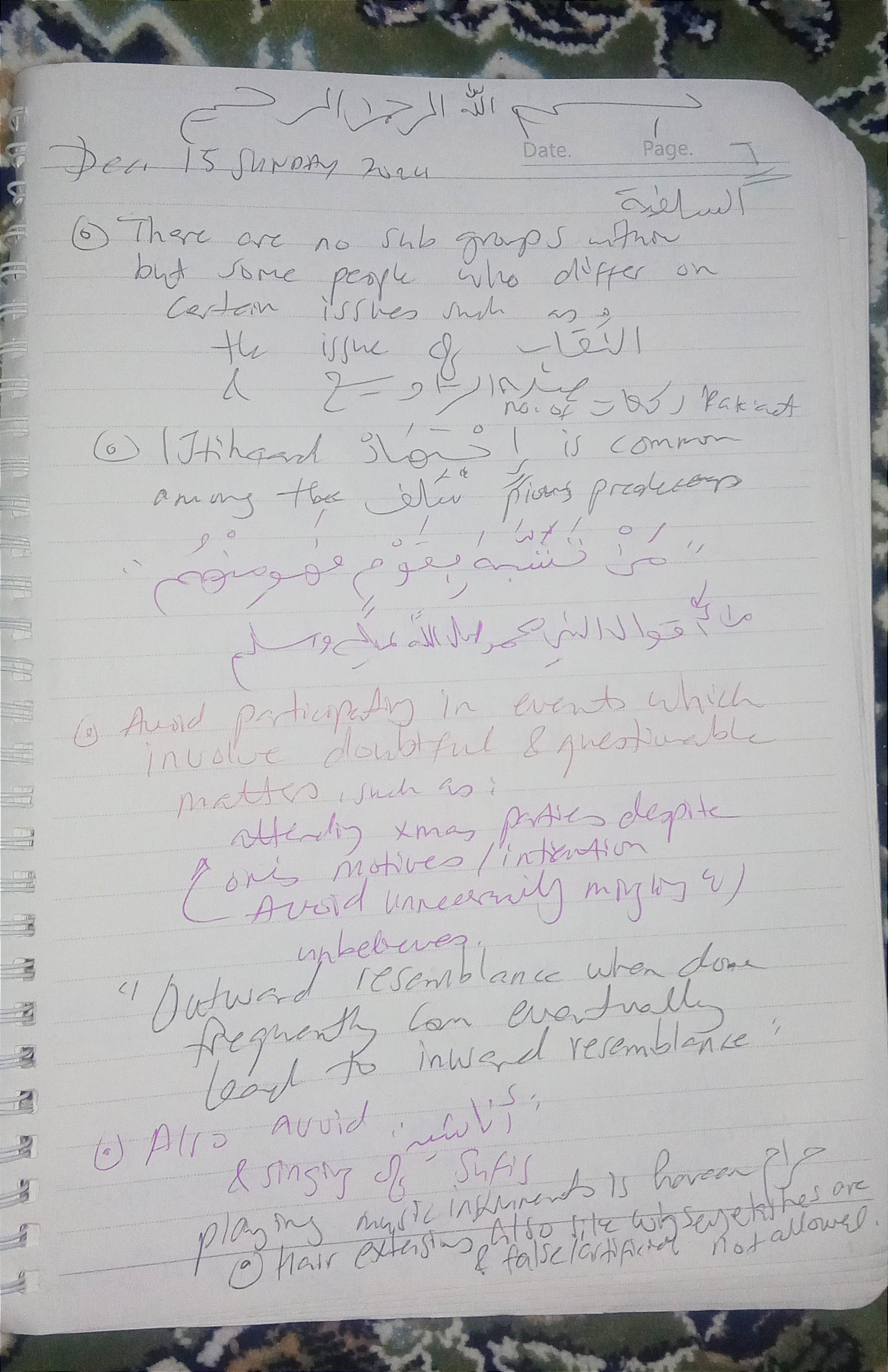
Note: Sharing Some Notes From Lecture Of Sheikh Abu Khadeejah On The 73 Sects/Groups And Only One Of Them Is Upon The Right 'Aqeedah Belief

بسم الله الرحمن الرحيم 

Note: Good Muslims Wouldn't Attend XMas Parties Even If They Received Many Invitations

بسم الله الرحمن الرحيم 


1. Seriously, it doesn't make sense for any good Muslim to attend an Xmas party or receive Xmas gifts because celebrating Christmas contradicts the core beliefs of Islam, which does not recognize Jesus as the Son of God.
2. Seriously, it doesn't make sense for any good Muslim to attend an Xmas party or receive Xmas gifts because participating in such festivities can blur the lines between Islamic teachings and non-Islamic traditions.
3. Seriously, it doesn't make sense for any good Muslim to attend an Xmas party or receive Xmas gifts because Christmas is rooted in religious practices that are not aligned with Islamic values and beliefs.
4. Seriously, it doesn't make sense for any good Muslim to attend an Xmas party or receive Xmas gifts because it may inadvertently promote the idea of celebrating something that Islam does not endorse.
5. Seriously, it doesn't make sense for any good Muslim to attend an Xmas party or receive Xmas gifts because Islam stresses the importance of maintaining a distinct identity and avoiding practices that could lead to the imitation of other faiths.
6. Seriously, it doesn't make sense for any good Muslim to attend an Xmas party or receive Xmas gifts because taking part in such events could be seen as endorsing or legitimizing a religious holiday that contradicts Islamic doctrine.
7. Seriously, it doesn't make sense for any good Muslim to attend an Xmas party or receive Xmas gifts because doing so might create confusion about a Muslim’s true religious convictions, particularly in front of non-Muslim friends and colleagues.
8. Seriously, it doesn't make sense for any good Muslim to attend an Xmas party or receive Xmas gifts because Christmas celebrations often involve elements like alcohol or other behaviors that are inconsistent with Islamic principles.
9. Seriously, it doesn't make sense for any good Muslim to attend an Xmas party or receive Xmas gifts because the religious significance of Christmas is incompatible with the belief in the oneness of Allah and the finality of Prophet Muhammad's message (SallAllahu 'alaihi wa sallam).
10. Seriously, it doesn't make sense for any good Muslim to attend an Xmas party or receive Xmas gifts because doing so could lead to unnecessary compromises in their religious integrity, especially if they are unaware of the holiday's deeper theological meaning.
11. Seriously, it doesn't make sense for any good Muslim to attend an Xmas party or receive Xmas gifts because Muslims are encouraged to focus on Islamic celebrations, such as Eid, rather than adopting customs from other religious practices.
⤴️ ChatGPT

Note: Some Reminders From An INTJ Muslimah (68)

 بسم الله الرحمن الرحيم 

Tuesday, December 10, 2024

Random Note: Most INTJs Don't Trust Easily So Once You Prove You're Unreliable They'll Try Their Best To Avoid You Completely

بسم الله الرحمن الرحيم 
❓ Question: Which 7 of the 16 mbti personality types generally have long-term or long lasting grudges against certain individuals? What are 7 reasons behind their resentment and 7 probable solutions to rebuild the connection if ever they're willing to reconcile? 
Which 7 of the 16 types are able to let go of resentment and they forgive others very easily?
💻 ChatGPT: ### **7 MBTI Types Most Likely to Hold Long-Term Grudges**

Some MBTI types have a tendency to hold onto grudges due to their deep emotional investment in relationships, their need for integrity, and their sensitivity to perceived injustices. The following seven types might be more likely to harbor long-term resentment:

1. **INFJ (The Advocate)**  
   - **Reason for Grudge**: INFJs often feel deeply betrayed if someone breaks their trust or violates their personal values. They may hold grudges because they are perfectionists who want to uphold deep, moral standards.
   - **Solution**: Sincere apologies, taking responsibility for their actions, and showing genuine efforts to change can help INFJs begin to rebuild the relationship.

2. **ISFJ (The Defender)**  
   - **Reason for Grudge**: ISFJs are loyal and protective of their loved ones. If they feel unappreciated or betrayed, they can hold grudges because they feel their efforts went unnoticed or were taken for granted.
   - **Solution**: A heartfelt, specific apology that acknowledges their sacrifice and loyalty, and consistent actions that demonstrate respect and gratitude, will help heal the relationship.

3. **INTJ (The Architect)**  
   - **Reason for Grudge**: INTJs hold grudges when they feel that their intelligence, judgment, or plans have been undermined or dismissed. Their trust in their abilities or decisions often makes betrayal or failure to acknowledge their efforts particularly disappointing.
   - **Solution**: Apologies that acknowledge their intellectual contributions and demonstrate a willingness to consider their strategic perspective may help rebuild trust (but this is very uncommon or unlikely to occur in most situations since many INTJs prefer to avoid dealing with individuals whom they regard as unreliable and untrustworthy).

4. **ENTJ (The Commander)**  
   - **Reason for Grudge**: ENTJs value competence and achievement. They can hold grudges if they feel someone has acted incompetently or undermined their authority, especially if it affects their goals or vision.
   - **Solution**: Showing competence and taking actions that demonstrate growth and respect for their leadership can help restore the relationship.

5. **ENFJ (The Protagonist)**  
   - **Reason for Grudge**: ENFJs are deeply invested in the well-being of others and can hold onto resentment if they feel their kindness has been exploited or their trust betrayed by someone they care about.
   - **Solution**: A heartfelt apology that recognizes their emotional investment and showing consistent, empathetic actions can help mend the relationship.

6. **INFP (The Mediator)**  
   - **Reason for Grudge**: INFPs are sensitive and idealistic. If they feel someone has violated their deeply held values or betrayed their trust, they can carry resentment for a long time.
   - **Solution**: Acknowledging their feelings, providing a sincere and genuine apology, and demonstrating a commitment to understanding their worldview can pave the way for reconciliation.

7. **ESTJ (The Executive)**  
   - **Reason for Grudge**: ESTJs value order, tradition, and structure. If they believe someone has disrespected their authority or deviated from established norms or rules, they may hold onto resentment.
   - **Solution**: Showing respect for their values, taking responsibility for any actions that disrupted order, and providing clear, logical explanations can help repair the relationship.

---

### **7 MBTI Types Likely to Let Go of Resentment and Forgive Easily**

On the other hand, some MBTI types are more likely to forgive and let go of resentment, either because they prioritize harmony, adaptability, or simply don't hold on to negative emotions for long.

1. **ESFJ (The Consul)**  
   - **Reason for Forgiveness**: ESFJs value relationships and harmony. They are often willing to forgive because they want to restore peace and maintain connections.
   - **Forgiveness Style**: They are likely to forgive quickly if they feel that the issue can be resolved through understanding and emotional connection.

2. **ISFP (The Adventurer)**  
   - **Reason for Forgiveness**: ISFPs are generally laid-back and focused on enjoying life in the present. They don’t dwell on past conflicts and prefer to focus on positive, current experiences.
   - **Forgiveness Style**: They forgive easily when they feel they can move forward without lingering on past negativity.

3. **ENFP (The Campaigner)**  
   - **Reason for Forgiveness**: ENFPs value personal growth and connection. They understand that people make mistakes, and their idealistic nature often leads them to forgive if they believe the person has learned from the experience.
   - **Forgiveness Style**: They forgive quickly if they believe the relationship is worth saving and if they can focus on future possibilities instead of past issues.

4. **ESTP (The Dynamo)**  
   - **Reason for Forgiveness**: ESTPs are pragmatic and focus on solutions, not past problems. They’re often able to move on quickly because they’re more concerned with the present and future than with lingering on past grievances.
   - **Forgiveness Style**: They are quick to forgive if they feel that moving forward is the most efficient and practical option.

5. **INFP (The Mediator)**  
   - **Reason for Forgiveness**: While INFPs can hold grudges, they are also very compassionate and want to see the good in others. They are likely to forgive if they believe there is an opportunity for healing or growth.
   - **Forgiveness Style**: They forgive relatively easily if they sense genuine remorse and feel that the person has learned or grown from the experience.

6. **ENTP (The Debater)**  
   - **Reason for Forgiveness**: ENTPs are often more focused on intellectual engagement and new ideas rather than holding onto grudges. They can forgive because they don’t want to be bogged down by emotional conflict and prefer to keep things dynamic and lively.
   - **Forgiveness Style**: They will forgive quickly if they feel the relationship can continue on a more stimulating and thought-provoking level.

7. **ISTP (The Virtuoso)**  
   - **Reason for Forgiveness**: ISTPs are independent and emotionally reserved, often able to compartmentalize negative feelings. They can forgive quickly because they don’t like to hold onto past emotional conflicts and prefer to move forward pragmatically.
   - **Forgiveness Style**: They forgive when they feel it’s the most practical way to move on and don’t overthink past grievances.

---

### **Summary**

- **Types Likely to Hold Grudges**: INFJ, ISFJ, INTJ, ENTJ, ENFJ, INFP, ESTJ.  
   These types may harbor grudges due to deeply held values, trust violations, or unresolved emotional conflicts. Solutions include sincere apologies, taking responsibility, and demonstrating respect for their emotions or intellectual contributions.

- **Types Likely to Forgive Easily**: ESFJ, ISFP, ENFP, ESTP, INFP, ENTP, ISTP.  
   These types are more likely to forgive because they prioritize harmony, emotional growth, and pragmatism. Solutions for forgiveness include showing understanding, allowing space for emotional growth, and moving forward in a constructive manner.

The top three MBTI types most likely to hold grudges—**INFJ**, **ISFJ**, and **INTJ**—each approach situations in which they no longer trust someone differently, both in the workplace and online. Here's a breakdown of how these types tend to behave when trust is broken in these environments:

---

### **1. INFJ (The Advocate)**

**In the Workplace**:  
- **Approach to Broken Trust**: INFJs are likely to withdraw emotionally from someone they no longer trust, maintaining a professional demeanor while keeping a safe emotional distance. They are typically very careful about their words and actions after trust is broken, often becoming more reserved and cautious in interactions. INFJs might try to observe the person over time to see if they can regain trust but won't easily open up to them again.
- **How They Deal**: INFJs will likely limit their communication to work-related matters, avoiding personal discussions or close collaboration with the person. They may work behind the scenes to ensure their own integrity is upheld, quietly making sure they’re not depending on or relying on the untrustworthy person. In team settings, they may become more independent and less likely to offer help or support to the person who betrayed them.
- **Example**: "I’ll continue to do my job, but I will avoid engaging with that colleague on a personal level. I’ve already made my boundaries clear."

**Online**:  
- **Approach to Broken Trust**: Online, INFJs may withdraw entirely from the person, unfollowing or blocking them on social media, especially if the betrayal was personal or involved a violation of their values. They may also take the opportunity to express their hurt through indirect or private messages, as they value emotional authenticity, but it’s rare for them to confront the person directly unless they feel strongly about it.
- **How They Deal**: INFJs might use their social media accounts to share posts that subtly reflect their feelings, expressing their pain through quotes or thought-provoking statements. They tend to be very private online, so they might cut ties with someone completely if they no longer trust them, minimizing interaction to protect their inner world.
- **Example**: "I won’t engage with that person online anymore. It’s not worth it. I’ll move forward quietly, and if they want to reach out, they’ll have to come to me."

---

### **2. ISFJ (The Defender)**

**In the Workplace**:  
- **Approach to Broken Trust**: ISFJs take betrayal of trust very personally, especially in the workplace, because they deeply value loyalty and harmony in professional relationships. When they no longer trust someone, they may continue working with them out of a sense of duty but will likely do so with noticeable emotional distance. They avoid conflict and prefer to maintain peace, so they may not outwardly express their resentment but will start withdrawing their support and cooperation.
- **How They Deal**: ISFJs may continue to perform their work to the best of their ability but will start distancing themselves from the untrustworthy individual. They might reduce sharing personal details or offering help, and their interactions will become more formal and task-oriented. They tend to be forgiving, but the emotional impact of broken trust will make them cautious about working closely with the person again.
- **Example**: "I’ll still get the work done, but I won’t be involving them in any of my personal projects or giving them any extra support."

**Online**:  
- **Approach to Broken Trust**: Online, ISFJs may be more forgiving, but if they truly feel betrayed, they are likely to quietly unfollow or unfriend the person. They may avoid public confrontation and choose instead to keep their distance. ISFJs value a peaceful, low-conflict online presence, so they may simply stop engaging with the person altogether rather than initiate a direct confrontation.
- **How They Deal**: ISFJs may post more general content that reflects their values, keeping their distance from the individual without directly addressing the issue. They may choose to restrict visibility of their posts to protect their emotional space and avoid further interaction.
- **Example**: "I won’t interact with them on social media anymore. I’ll still be polite if they contact me, but I won’t open up to them like before."

---

### **3. INTJ (The Architect)**

**In the Workplace**:  
- **Approach to Broken Trust**: INTJs are strategic and rational, so when they no longer trust someone in the workplace, they are likely to become much more detached and less cooperative or less available to that particular individual whom they can't trust. They value competence and efficiency, so if they believe someone has compromised those qualities, they may deliberately minimize their reliance on that person. INTJs are unlikely to express their resentment openly, instead choosing to maintain professionalism while creating clear boundaries.
- **How They Deal**: INTJs will likely stop engaging in unnecessary conversations or collaborations with the untrustworthy individual, focusing solely on the task at hand. If possible, they may attempt to limit their exposure to that person by rearranging team structures or delegating tasks in a way that keeps them apart. They may also quietly document or monitor the person’s behavior to ensure their own professional interests are protected.
- **Example**: "I’ll keep my interactions strictly business. If I have to work with them, it will be minimal and solely focused on outcomes, no personal connection."

**Online**:  
- **Approach to Broken Trust**: Online, INTJs are likely to cut ties quickly with someone they no longer trust, unfriending or blocking them without hesitation. They take betrayal seriously, and in the online world, they view trust violations as a waste of time. They are likely to use social media to express ideas, strategies, or intellectual debates, but if someone crosses them, they will remove them from their virtual world just as decisively as they would in person.
- **How They Deal**: INTJs may not engage in any emotional drama or conflict online but will ensure that the person no longer has access to their thoughts, ideas, or personal life as much as possible. They’ll maintain a highly curated online presence and may even take steps to prevent the person from accessing any content that could be used against them.
- **Example**: "I’ll simply block them (or never bother browsing around their Facebook timeline or never thoroughly read any of their comments etc.). I don’t have time for people who don’t know a single thing about integrity."

---

### **Summary of Differences**

- **INFJ**: In both the workplace and online, INFJs will keep a respectful distance but may express their hurt indirectly. They value emotional authenticity and are more likely to cut ties completely if trust is broken, especially in personal or professional relationships.
  
- **ISFJ**: ISFJs, while forgiving, will likely become more distant and formal in both the workplace and online. They avoid confrontation but may stop offering personal support or engagement. They value harmony and would prefer to keep interactions civil but impersonal once trust is compromised.

- **INTJ**: INTJs are highly strategic and rational. They will create clear boundaries in both professional and online spaces, preferring to limit any personal interaction with someone they no longer trust. They will ensure that their work or personal life is not impacted by the betrayal and may remove the person from their sphere entirely.

These three types are likely to deal with broken trust by minimizing emotional or personal engagement, opting for distance and professional detachment.