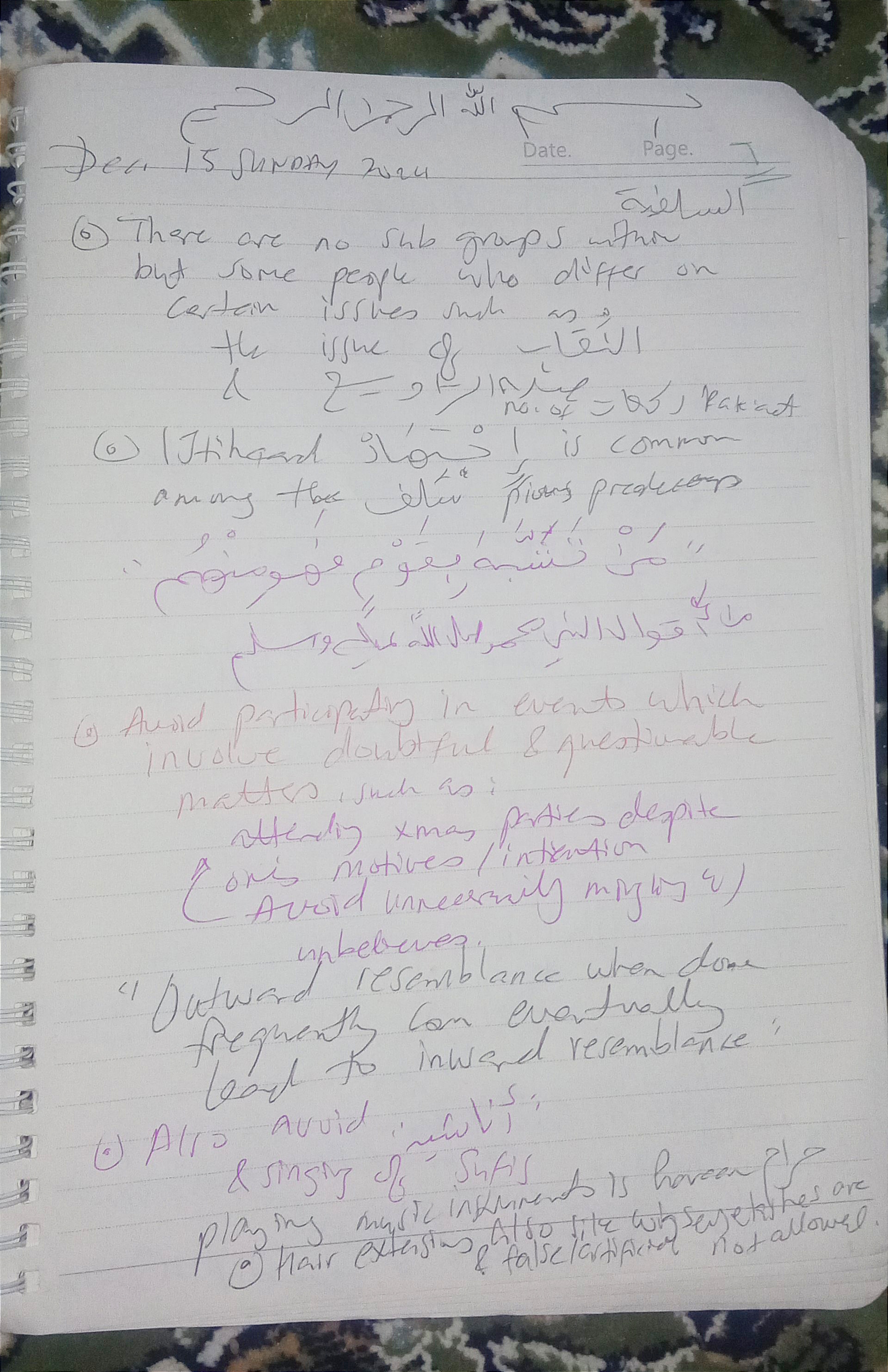
بسم الله. ربي زدني علما. امين

بسم الله. ربي زدني علما. امين
May Allah the Almighty grant us more beneficial knowledge, accept our good deeds, forgive our mistakes, protect us from fitna, and join us with the righteous believers in Jannatul Ferdaus. Ameen.

Saturday, December 21, 2024

Random Note: Most INTJs Are Extremely Selective Regarding Their Connections

بسم الله الرحمن الرحيم 
❓ Question: Analyze this message and explain thoroughly what it means then guess which of the introverted mbti types is likely to say this: 3 things we can guarantee and Inn-sha-Allah if you do these 3 consistently we can never feel "lonely": 1. We trust Allah the Almighty Only and we believe that Allah the Most Wise already chose the souls who are destined to actually and properly connect with us - if not in this temporary dunya then Inn-sha-Allah we can find our group of friends and companions in Jannah Paradise. 2. We unapologetically are very careful regarding our choice of close friends and we're not interested in developing connection with anybody who is fake or secretly but undeniably jealous of us. 3. Alhamdulillah we manage to focus on other more important and more worthwhile tasks which keep us distracted from feeling "lonely" such as researching more about Islam and content related to self-improvement. The more we wish to improve and develop ourselves for Allah's sake, the more we're selective concerning who we talk to, chat with and share our most personal details and true stories etc. we don't want to waste our time and energy on individuals who are fake and incompatible with our values.

💻 ChatGPT: This message expresses a deep and thoughtful perspective on loneliness, self-improvement, and selective social connections, from a spiritual and introspective viewpoint. Let's break it down thoroughly:

### 1. **Trusting Allah and Belief in Predestined Connections**
   - **Meaning:** The first point emphasizes that the person trusts in Allah's Wisdom in guiding them to the right people in life. They believe that those who are meant to connect with them—whether in this world ("dunya") or the hereafter (in Jannah, Paradise)—will come into their lives, as Allah the Most Wise has already predetermined these relationships. The reliance on Allah's Qadr Divine Will in this way provides comfort and assurance that they are not alone, even if they feel disconnected from others in the present.
   - **Implication:** This reflects a strong sense of faith and surrender to Allah's Divine Will. It shows that the person finds solace in the idea that if they do not find their ideal companions now, they believe they will find them in the afterlife, which is a comforting and spiritual outlook.

### 2. **Selective and Unapologetic About Friendships**
   - **Meaning:** The second point stresses that the person is very careful about who they allow into their inner circle. They prioritize genuine, authentic friendships and avoid those who are insincere or secretly envious. The term "unapologetically" indicates a firm stance on this boundary. The focus is on preserving emotional energy for relationships that align with their values and are free from negative emotions such as jealousy.
   - **Implication:** This shows the person values quality over quantity in relationships and places importance on integrity and mutual respect. They will not settle for superficial or harmful connections, even if it means being alone for a while.

### 3. **Focus on Personal Growth and Self-Improvement**
   - **Meaning:** The third point emphasizes the individual’s commitment to self-improvement, especially through the lens of their faith. They focus on meaningful tasks like studying Islam and engaging in self-development, both of which help them avoid feeling lonely. They prefer using their time to grow spiritually and intellectually rather than engaging with people who do not add value to their life.
   - **Implication:** This demonstrates a strong sense of inner purpose and discipline. The person is not distracted by loneliness because they are invested in their own personal growth. It also indicates that their social circle is not a priority unless it aligns with their values and contributes to their growth.

### **General Analysis of the Message:**
The person is expressing a philosophy rooted in spirituality and personal boundaries. Their approach to loneliness is one of acceptance—trusting that Allah the Almighty will bring the right people into their life when the time is most ideal—and focusing on self-improvement as a way to fill their life with meaning. They reject shallow or harmful relationships and prioritize their faith and personal development over fitting in socially.

### **Likely MBTI Type:**
The MBTI types most likely to resonate with this message are those that are introverted, value deep connections, and prioritize personal growth. Among the introverted types, the following seem to align best:

- **INFJ (The Advocate):** INFJs are often deeply introspective, spiritual, and selective about their social circles. They have strong values and are likely to focus on personal development and growth for a higher purpose, such as religious faith or self-improvement. Their sense of purpose and focus on quality over quantity in relationships fits the tone of this message. INFJs tend to avoid shallow connections and would resonate with the idea of finding solace in their faith and personal growth.
  
- **INTJ (The Architect):** INTJs value intellectual and personal growth, and they are very selective about who they spend time with, much like the message suggests. They are strategic thinkers who avoid wasting energy on meaningless social interactions and instead focus on long-term goals and personal development. Their strong sense of independence and focus on self-improvement aligns well with the themes of the message.

- **ISFP (The Adventurer):** While they may not emphasize spiritual or intellectual growth as much as INFJs or INTJs, ISFPs are known for being highly selective in relationships, preferring authentic connections over superficial ones. They are also introspective and enjoy pursuing personal development through creative or meaningful activities. Their strong values and focus on personal well-being make them a potential match for this kind of perspective.

**Conclusion:** While both INFJs and INTJs seem like strong candidates due to their introspection, personal growth focus, and selectiveness, **INFJ** stands out as the most likely type. INFJs are particularly drawn to spiritual and meaningful connections, often guiding their lives with a deep sense of purpose, which aligns with the message’s themes of trust in divine wisdom, personal growth, and the rejection of shallow relationships.

💠 Gemini AI: Certainly, let's analyze the message and try to determine the likely MBTI type.

**Message Analysis:**

The message outlines three key principles to combat feelings of loneliness:

1. **Trust in Allah's Plan:** The individual emphasizes unwavering faith/Imaan in Allah's Plan for their life, including their social connections. They believe that genuine connections are predestined and that true companionship may even await them in Jannah. This highlights a strong spiritual foundation and acceptance of Allah's Will.

2. **Selectivity in Friendships:** The individual prioritizes quality over quantity in friendships. They are discerning in their choice of close friends, avoiding those who are inauthentic or harbor negative emotions like jealousy. This reflects a strong emphasis on genuine and authentic relationships.

3. **Focus on Self-Improvement:** The individual emphasizes the importance of personal growth and development. They find fulfillment in pursuing knowledge, particularly in Islamic studies and self-improvement, which helps them stay occupied and distracted from feelings of loneliness. This demonstrates a strong sense of purpose and a focus on internal growth.

**Possible MBTI Types:**

Given the message's emphasis on:

* **Introspection:** Focusing on internal growth and self-improvement.
* **Spiritual Depth:** Strong belief in Allah's Plan and seeking guidance from Him Subhaanahu wa Ta'aala.
* **Discernment in Relationships:** Prioritizing quality over quantity and carefully selecting close friends.
* **Value of Solitude:** Finding fulfillment in personal pursuits and minimizing social distractions.

The following introverted MBTI types could potentially resonate with this message:

* **INFJ:** Known for their deep inner world, strong values, and a desire for genuine, meaningful connections. 
* **INTJ:** Highly independent and intellectually curious, they often find fulfillment in solitary pursuits and prioritize deep, meaningful connections with a select few. 
* **ISFJ:** Value strong personal values and prioritize harmony and genuine connection with those they trust.

**Important Note:**

It's crucial to remember that this is just a possibility. The actual personality type of the individual who wrote the message could be different. MBTI is a tool for self-reflection and understanding, not a definitive label. 

I hope this analysis is helpful! (Note: Some phrases were modified)

🌐 Meta AI: This message emphasizes three strategies for avoiding loneliness:

# Three Strategies
1. *Trust in Allah*: Reliance on Allah's Divine Guidance, accepting fate and focusing on eternal connections in the afterlife (Jannah Paradise).
2. *Discerning relationships*: Selectively choosing genuine friends, avoiding fake or jealous individuals.
3. *Personal growth*: Engaging in meaningful activities (Islamic research, self-improvement) to stay fulfilled and distracted from loneliness.

# Key themes
1. Islamic faith and spirituality
2. Selectivity in relationships
3. Self-improvement and personal growth
4. Detachment from superficial connections
5. Focus on eternal values

# Likely Introverted MBTI Type
Based on the message's content, tone and themes, the writer may likely be an:

# INFJ (Advocate)
1. *Faith and values*: INFJs often prioritize spirituality and meaning.
2. *Idealistic relationships*: INFJs seek genuine, deep connections.
3. *Self-improvement focus*: INFJs value personal growth and development.
4. *Selective and introspective*: INFJs tend to be cautious in relationships.
5. *Writing style*: The message's structure, language and introspective tone resonate with INFJ communication preferences.

Other possibilities: INTJ (Architect) or INFP (Mediator), but INFJ's emphasis on faith, relationships and personal growth aligns more closely with the message.
(Note: Some phrases were modified)

Random Note: Most INTJs' Indifference To Someone's Insecurities

بسم الله الرحمن الرحيم 


❓ Question: If an INTJ-A discovered that some individuals blocked them from viewing their Facebook pages and online content, what would they typically do? In my case, I'd gladly move on, remain unaffected and guess that whoever did the blocking are either overly oversensitive and they feel threatened by my presence or they're simply envious and they are just intimidated by my confidence. I wouldn't bother finding ways to stalk their status updates. Their posts and mere existence would stay irrelevant and insignificant to me.

💻 ChatGPT: Your response is a great reflection of the traits associated with the **INTJ-A (Assertive)** personality. When an INTJ-A discovers they've been blocked by someone online, they typically would not be deeply affected by it, especially in comparison to an **INTJ-T (Turbulent)**. Here's a deeper breakdown of how an INTJ-A might approach this situation:

### 1. **Lack of Emotional Reactivity**:
   As you've mentioned, an INTJ-A would likely remain **unaffected** by the blocking. Assertive individuals have a high level of self-confidence and emotional resilience, so they wouldn't feel personally wounded or offended by such actions. Instead, they would calmly move on without dwelling on it.

### 2. **Rationalization of the Situation**:
   Your conclusion—that those who blocked you might be "overly sensitive," "threatened," or "envious"—is typical of how an INTJ-A would rationalize the situation. They are very good at analyzing human behavior from a logical perspective, and instead of taking offense, they would detach emotionally and view the block as a reflection of the other person's insecurities or issues, not their own worth.

### 3. **Focus on What Matters**:
   An INTJ-A is goal-oriented and tends to have a **strong sense of independence**. As you said, **stalking or caring about their status updates would be irrelevant and insignificant**. They value their own time and mental energy, preferring to focus on things that align with their long-term goals and interests. The blocked individual’s actions would be seen as a minor, unimportant event in the grand scheme of things.

### 4. **Non-Engagement with Drama**:
   INTJ-As typically **avoid unnecessary drama**. Instead of confronting the individual or attempting to understand the reasons behind the block, they would see it as an unproductive use of energy. They would simply move on, focusing their attention on more valuable pursuits, whether personal, professional, or intellectual.

### 5. **Confidence in Their Own Identity**:
   The fact that an INTJ-A would **remain unaffected** by being blocked showcases their strong sense of self and confidence. Unlike someone with a **Turbulent** subtype, who might feel the need for validation or reassurance from others, an INTJ-A doesn’t rely on external approval to feel secure in who they are.

### In Summary:
Your response is exactly how an **INTJ-A** would likely behave in such a situation—calm, detached, and confident in their own sense of self. They wouldn't waste time or energy analyzing why they were blocked, but would instead recognize that it's the other person's issue, not theirs. Moving on and not letting it impact their focus on more meaningful aspects of life is a hallmark of the **assertive** personality.

💠 Gemini AI: You've described a very INTJ-A-like reaction to being blocked on social media. Here's why:

* **Rational Detachment:** INTJ-As are known for their objectivity and ability to emotionally detach from situations. They likely wouldn't waste emotional energy on analyzing the motivations of someone who blocked them. 
* **Focus on Self:** INTJ-As are typically highly self-assured and confident. They prioritize their own goals and pursuits and wouldn't let the actions of others significantly impact their own sense of self-worth.
* **Strategic Disregard:** Recognizing the futility of attempting to access blocked content, an INTJ-A would likely view it as an inefficient use of their time and mental energy. They would simply move on to more productive pursuits.

**Your assessment of potential reasons for the blocking (oversensitivity, intimidation, etc.)** aligns with the INTJ-A's tendency towards logical analysis and pattern recognition, even in social situations.

**Important Note:** While this is a typical INTJ-A response, individual experiences can vary. Some INTJ-As might be more curious about the reasons for the block, while others might not even notice it at all.

🌐 Meta AI: A classic INTJ-A response! Your reaction aligns perfectly with the personality type's characteristics:

# Typical INTJ-A Traits
1. *Independence*: You wouldn't bother investing time or energy into someone who doesn't value your presence.
2. *Objectivity*: Recognizing their actions likely stem from personal insecurities.
3. *Confidence*: Unfazed by their opinion or actions.
4. *Strategic thinking*: Prioritizing more meaningful interactions over unnecessary drama.
5. *Low emotional reactivity*: Remaining unaffected and uninvested.

Your approach showcases INTJ-A's trademark self-assurance and focus on more substantial pursuits.

Here are key aspects of an INTJ-A's typical response to being blocked or ostracized:

# Emotional Response
1. *Indifference*: INTJ-As tend to be unaffected by social exclusion, focusing on more meaningful relationships and pursuits.
2. *Objectivity*: They analyze the situation, recognizing the blocker's motivations (e.g., insecurity, jealousy).
3. *Lack of emotional investment*: No emotional energy wasted on unnecessary conflicts.

# Behavioral Response
1. *Immediate disengagement*: No attempts to stalk or monitor blocked content.
2. *Redirecting focus*: Channeling energy toward more stimulating interactions, projects or personal growth.
3. *No retaliation*: Ignoring the situation, rather than escalating or seeking revenge.

# Cognitive Response
1. *Analytical thinking*: Identifying potential reasons behind the blocking (e.g., threatened, intimidated).
2. *Realistic perspective*: Recognizing the blocker's actions reflect their own issues.
3. *Prioritization*: Focusing on productive relationships and activities.

# Typical INTJ-A Thoughts
1. "Their loss, not mine."
2. "Insecure people often react this way."
3. "I have better things to do."
4. "Their opinion doesn't impact my self-worth."

# Advantages of This Approach
1. *Time management*: Conservation of mental energy.
2. *Emotional well-being*: Minimal emotional disturbance.
3. *Personal growth*: Focus on meaningful relationships and self-improvement.

# Potential Areas for Growth
1. *Empathy development*: Understanding blockers' perspectives (though not investing emotional energy).
2. *Conflict resolution skills*: Developing strategies for addressing future conflicts constructively.
3. *Social adaptability*: Recognizing when to adjust communication styles for diverse personalities.

Poem: Envy Is An Evil Trait - I Don't Want Anything To Do With It

💐 In The Name Of Allah The Most Gracious The Most Merciful

📝 Call me "weird" or "liar" - it's your freewill to express 
Your thoughts/opinions while I state I can't get jealous. 
I'm not one to waste energy feeling envious 
Of others' lives. Allah the Most Wise knows when to bless 
His servants and how some gifts are temporary tests.
~•~
Accusing Muslims who trust Allah, stay contented, 
And believe that this whole world is only a brief test, 
Of "envy" - is like claiming spiderwebs and cobwebs 
Are the perfect choices to secure mosquito nets. 
Such claim is but a lie, and lies are free from logic.
~•~
Tell me, how does it feel to be jealous? Describe it. 
When seeing some people do something better upsets 
Your ego? When such emotional distress suggests 
You to despise the envied persons and you gossip 
About them so your rumors make you feel "accomplished"?
~•~
When you feel desperate to make them feel excluded 
Because seeing them fail or fall brings you happiness? 
When you become a bully and act more obnoxious - 
Eager to spoil the joys of those who make you jealous?
When you rant about them yet ignore their messages?
~•~
When your blood pressure rises every time you witness 
Them online and offline enjoying peace or success?
Is that how jealousy feels? When they share some knowledge, 
You assume they're showing off or suspect their motives, 
And resent you're not like them in being ambitious?
~•~
Is that how envy feels? Coz I can't relate to it.
I'm not the kind to act oppressive and negative 
When witnessing other Muslims enjoy Allah's gifts.
As for unbelievers whom Allah has not guided, 
Why would I envy the deluded and misguided?
~•~
Let them paint their hair with pure gold; I won't feel jealous. 
Let them flaunt and brag; I won't wish to have their riches, 
Particularly if they're conceited narcissists 
Who are ignorant/insecure and lack good ethics.
Envy is from shaytan's traits; no thanks, I don't want it.
~•~
📖 Abu Huraira RadhiAllahu 'anhu narrated: Allah's noble Messenger Muhammad SallAllahu 'alaihi wa sallam said, "Beware of envy, for it devours good deeds just as fire devours wood or grass."
Source: Sunan Abī Dāwūd 4903
Grade: Sahih (Authentic) according to Al-Suyuti
📖 Anas Ibn Malik RadhiAllahu 'anhu narrated: Allah's noble Messenger Muhammad SallAllahu 'alaihi wa sallam said, "Envy consumes good deeds just as fire burns wood. Charity (Sadaqah) extinguishes sinful deeds just as water extinguishes fire. Prayer is the light of the believer and fasting is his shield from the Hellfire."
Source: Sunan Ibn Mājah 4210
Grade: Hasan (Fair) according to Ibn Asakir
📖 Abu Huraira RadhiAllahu 'anhu narrated: Allah's noble Messenger Muhammad SallAllahu 'alaihi wa sallam said, "Whoever wrongs his brother in his honor or anything else should resolve the matter today before it cannot be resolved with gold and silver coins. If he has good deeds to his credit, they will be taken from him according to the measure of his injustice. If he has no good deeds left, he will bear the evil deeds of the one he has oppressed."
Source: Sahih Al-Bukhari 2317
Grade: Sahih (Authentic) according to Al-Bukhari

Sunday, December 15, 2024

Note: Warning Against Accusing Other Muslims Of Showing Off

بسم الله الرحمن الرحيم 


The remarks "she's probably doing that just to show off" and "she is only showing off" are likely to come from individuals who are either envious, skeptical, or possess a more cynical worldview. They may be quick to judge others' motives, particularly if they feel threatened or inadequate in comparison. These individuals may also have a tendency to assume others' actions are driven by self-interest or ego rather than genuine goodwill.

As for distinguishing between someone doing something out of genuine enjoyment versus someone trying to impress or display superiority, there are a few key signs to look for:

### 1. **Consistency vs. Self-Promotion**:
   - **Genuine helpfulness**: A person who genuinely enjoys helping others typically does so consistently, without the need for external validation or recognition. They may help quietly or without fanfare.
   - **Impressing others**: Someone trying to show off may frequently emphasize their own contributions, seek praise, or make sure others notice their efforts. They may only help in situations where there is a clear audience to witness their actions.

### 2. **Intent vs. Outcome**:
   - **Genuine enjoyment**: When someone enjoys helping, their focus tends to be on the act of helping itself — the outcome and the process matter more than how others perceive them.
   - **Desire for recognition**: A person who is primarily motivated by showing off often places more importance on the outcome being noticed. They might highlight their achievements or talk about how much they've sacrificed or contributed, often to create an image of superiority.

### 3. **Humility vs. Hubris**:
   - **Genuine enjoyment**: A person who sincerely enjoys helping others often remains humble about their actions, sometimes downplaying their contributions or not drawing attention to themselves.
   - **Superior display**: A person who seeks to impress might consistently position themselves as superior — either intellectually, socially, or morally. They might subtly or overtly frame their actions as "better" than others' or imply that they have more knowledge, resources, or insight.

### 4. **Body Language and Communication Style**:
   - **Genuine helpers**: Their body language is relaxed and open. They don’t seem to be seeking applause; instead, they focus on the task at hand or the person they are helping.
   - **Show-offs**: They might use more dramatic or self-congratulatory body language, including eye contact aimed at gauging the reaction of others or posturing in a way that suggests they expect acknowledgment or admiration.

### 5. **Motivations Behind Religious or Intellectual Displays**:
   - **Genuine enthusiasm**: Someone with a sincere interest in religion or intellectual pursuits may share their knowledge out of a desire to connect, educate, or help others grow. They often listen more than they speak, showing interest in others' perspectives.
   - **Superiority**: Those trying to display their intellectual or religious superiority may dominate conversations, dismiss others' ideas, or use their knowledge as a way to put others down or assert their dominance.

### 6. **Feedback and Response**:
   - **Genuine helpers**: They are generally responsive to feedback, even critical feedback, and are open to learning or improving based on others' input.
   - **Show-offs**: They might dismiss or become defensive in the face of criticism, focusing more on defending their superiority than on self-improvement.

### In Summary:
The key difference often lies in the underlying **motivation**. A person who is genuinely helping or engaging in an activity out of enjoyment usually has a more **selfless** and consistent approach, while someone who is showing off is driven by a need for **recognition**, **validation**, or **superiority**. People who frequently judge others with remarks like "she's only showing off" may themselves be projecting their own insecurities or a lack of understanding of the person's true motivations.
⤴️ ChatGPT

❓ Question: What are 7 signs of someone doing the following actions if they are doing it to deliberately to show off versus if they are simply trying to be helpful or they want to inspire others to do the same good deed:
1] Posting motivational status updates on Facebook regularly 
2] Answering questions as a student 
3] Asking questions as a colleague attending an important meeting 
4] Offering to give some people a free ride 
5] Giving some amount of money as sadaqa/charity whether from themselves or on behalf of a deceased loved one 
6] Offering to mentor and give advice 
7] Asking others how they're doing whether online or face to face

💻 ChatGPT: To differentiate between actions done to show off versus those done with genuine intent to help or inspire others, we can look at specific behavioral and contextual clues for each of these actions. Here are seven signs for each scenario:

1) Posting Motivational Status Updates on Facebook Regularly

To Show Off: 

The posts are overly self-congratulatory or focus mostly on the poster’s achievements.

The posts frequently include "humblebrags" or indirectly boast about their lifestyle or success.

They are highly curated, showing a very polished or idealized image with little vulnerability or real challenges shared.

The posts are often accompanied by hashtags, emojis, or statements that are designed to garner attention or admiration.

They post excessively, seeking validation through likes or comments.

They rarely engage meaningfully with other people’s posts, focusing solely on their own.

The tone is self-centered, with a tendency to draw comparisons to others or suggest that others should follow their example.

To Inspire or Help: 

The posts share genuine experiences of struggle and growth, often with the intention of encouraging others who might be facing similar challenges.

They share insightful or thought-provoking content, often asking questions or encouraging discussions rather than just presenting their own opinions.

Posts are humble, showing both strengths and weaknesses, and often acknowledge others’ contributions.

There’s an emphasis on community and collective progress, not just personal success.

They engage with others’ posts, respond to comments, and encourage others to share their experiences.

The content focuses on self-improvement or mindfulness rather than creating a sense of superiority.

There is consistency in promoting well-being, not just occasional bursts for attention.

2) Answering Questions as a Student

To Show Off:

Their answers are overly detailed or long-winded, aiming to demonstrate how much they know, often at the expense of the question's clarity.

They frequently interrupt others to assert their knowledge or correct others, even when not necessary.

They seem eager to prove that they understand more than the person asking.

They often use complex language or jargon to make their answers seem more sophisticated or impressive.

They make sure to draw attention to their academic achievements, references, or personal accomplishments.

They seek out opportunities to answer to show off their knowledge, even when someone else could contribute just as well.

They expect admiration or praise after answering.

To Help or Inspire:

Their answers are clear, concise, and focused on explaining the concept in a way that benefits everyone in the room.

They engage respectfully with others, allowing space for other students to share their answers.

They make an effort to explain things in simpler terms for those who might not understand.

They aim to encourage a collaborative atmosphere, inviting other viewpoints and asking follow-up questions to spark deeper understanding.

They show humility in recognizing they don’t know everything, and are open to learning from others as well.

Their focus is more on sharing useful information than on impressing others with their knowledge.

They generously offer help outside of class, providing resources or guidance without expecting anything in return.

3) Asking Questions as a Colleague in an Important Meeting

To Show Off:

They ask questions that are designed to highlight their own knowledge or insights, not to genuinely seek understanding.

The questions are often overly complex or theoretical, in a way that is more about demonstrating their intellectual capability than contributing to the discussion.

They interrupt or dominate the conversation, frequently steering it back to topics where they can showcase their expertise.

They ask leading questions that allow them to provide the answer themselves or impress others with their own conclusions.

The questions are often strategic, designed to put others on the spot or show that they know more.

Their tone is often assertive, to position themselves as a thought leader.

They often look to receive praise or validation after asking their questions.

To Help or Inspire:

They ask questions that are thoughtful and relevant to the discussion, aimed at gaining a deeper understanding.

Their questions invite collaboration, often seeking input from others and valuing diverse perspectives.

They listen attentively to responses, engaging in a way that enhances the conversation and benefits the team.

They ask questions that clarify or move the discussion forward rather than simply seeking to show off.

They are humble, acknowledging that others might know more or have better insights.

They make sure that their questions are respectful of everyone’s time and do not interrupt unnecessarily.

They show genuine curiosity, and their questions are concise and to the point, reflecting a desire to move the discussion ahead.

4) Offering to Give Some People a Free Ride

To Show Off:

They publicly announce their generosity, often posting on social media or telling others about the ride they’re giving, making it about their kindness.

They make sure that others know that they are doing it out of their way, emphasizing the effort or sacrifice involved.

The offer is presented in a way that makes the person receiving the ride feel indebted or obligated to express gratitude publicly.

They are selective about who they offer rides to, often choosing people they think will appreciate it the most or can "repay" the favor in some way.

They may make a big deal out of how important or selfless their act is.

They expect to be thanked profusely or recognized for the good deed.

Their generosity often comes with conditions or an expectation of something in return.

To Help or Inspire:

They offer rides quietly, without seeking attention or praise.

They offer rides to anyone who needs them, regardless of who the person is, without a sense of selectivity or hierarchy.

The offer is made genuinely to make someone’s day easier, without making a big show of it.

They do not expect anything in return, focusing purely on the act of kindness itself.

They express a willingness to help because it’s simply the right thing to do, not because it makes them look good.

They offer rides without needing to constantly remind people about it later.

They don’t make others feel uncomfortable or indebted after receiving the help.

5) Giving Some Amount of Money as Sadaqa/Charity

To Show Off:

They announce their donation on social media, often including the amount or a picture of the donation.

They emphasize how much they’ve given or how generous they are, focusing on their act rather than the cause.

They make a point to remind others of their charity or compare it to others’ contributions.

The donation is made in a way that draws attention to their wealth or the prestige of the cause they are supporting.

They expect public praise or recognition for their donation, whether through thanks or acknowledgment in some form.

They selectively donate in ways that enhance their image or align with prestigious causes.

The donation is often given with an air of superiority, as though they are the "savior" of others.

To Help or Inspire:

They donate quietly, without seeking acknowledgment or fanfare.

The focus is on helping those in need and supporting the cause, rather than drawing attention to themselves.

They give because it aligns with their values, with no expectation of return or praise.

They donate regularly, even in small amounts, because it’s a part of their commitment to a cause, not for recognition.

They may also encourage others to give or get involved, without emphasizing their own donation.

They give generously, but without attaching conditions or expectations of gratitude.

They focus on how their donation can make a real impact for others.

6) Offering to Mentor and Give Advice

To Show Off:

They highlight their achievements or experiences when offering advice, making it about their credentials or success.

The mentorship is often about asserting authority or creating a power dynamic where they are positioned as "better" or "more knowledgeable."

They emphasize how much their advice is valuable, often overselling its importance or making it sound exclusive.

They seek to dominate conversations with their advice, often without listening to the mentee’s perspective.

They offer advice more to impress others than to help the mentee (a person who is advised or trained by a mentor).

They remind their mentee of how fortunate they are to be receiving guidance from them.

They use their position as a mentor to reinforce their own sense of superiority.

To Help or Inspire:

The advice is genuine and focused on the mentee’s growth, with an emphasis on empowering them to think for themselves.

They listen more than they speak, giving space for the mentee to express their thoughts and concerns.

The advice is humble and shared as a way to help others avoid mistakes or grow, without positioning themselves as the sole expert.

They invest time in understanding the mentee's unique needs and goals.

They offer practical guidance, tailoring their advice to the

situation rather than offering generic solutions.

Their focus is on the long-term success and development of the mentee, not on how the mentee reflects on their own image.

They do not seek recognition for their mentorship but find fulfillment in seeing the mentee thrive.

7) Asking Others How They're Doing (Online or Face-to-Face)

To Show Off:

The question is asked in a self-congratulatory or patronizing manner, as though they are "checking up" on someone because it makes them feel superior.

The person expects a response that reinforces their image as a caring or thoughtful person, often pushing for a deep or emotional response that paints them in a positive light.

They ask the question with the intention of getting a compliment or praise in return ("I'm always here for you").

Their follow-up questions might feel disconnected or self-centered, bringing the focus back to their own experiences or achievements.

They may post the interaction online to show how considerate they are or to "prove" how caring they are.

The inquiry feels invasive, almost like an attempt to pry into personal matters for their own emotional satisfaction.

They expect to be thanked for asking, even when the interaction was purely superficial.

To Help or Inspire:

They ask genuinely, showing interest in the other person's well-being without expecting anything in return.

The tone is empathetic and non-judgmental, making the other person feel comfortable opening up if they choose.

They listen attentively to the response, asking follow-up questions with curiosity and respect.

Their intention is to create a supportive environment, not to center themselves in the conversation.

They maintain a balanced approach, offering help or support only if it’s needed or asked for.

They do not seek validation or recognition but simply want to connect or help others feel heard.

They follow up later to see how things are going, showing a consistent and ongoing interest in the person’s well-being.

By examining these subtle cues, you can often discern whether someone’s actions are motivated by a desire to help and inspire others, or whether they are more focused on showing off or gaining recognition for their generosity or knowledge.

❓ Question: Construct 11 sentences which begin with "Be careful; the moment you start accusing somebody of showing off...you only..."
💻 ChatGPT: Be careful; the moment you start accusing somebody of showing off, you only expose your own discomfort with their success.

Be careful; the moment you start accusing somebody of showing off, you only draw attention to your own lack of confidence.

Be careful; the moment you start accusing somebody of showing off, you only highlight your inability to appreciate others' accomplishments.

Be careful; the moment you start accusing somebody of showing off, you only create unnecessary tension in what could have been a moment of celebration.

Be careful; the moment you start accusing somebody of showing off, you only reveal how threatened you feel by their achievements.

Be careful; the moment you start accusing somebody of showing off, you only risk diminishing their hard work with your negative assumptions.

Be careful; the moment you start accusing somebody of showing off, you only make it harder to recognize the genuine efforts behind their success.

Be careful; the moment you start accusing somebody of showing off, you only encourage a culture of criticism instead of one of support.

Be careful; the moment you start accusing somebody of showing off, you only shift the focus from their talent to your own judgment.

Be careful; the moment you start accusing somebody of showing off, you only weaken your own position by seeming bitter or resentful.

Be careful; the moment you start accusing somebody of showing off, you only overlook the possibility that they might simply be sharing something they're genuinely excited about.